
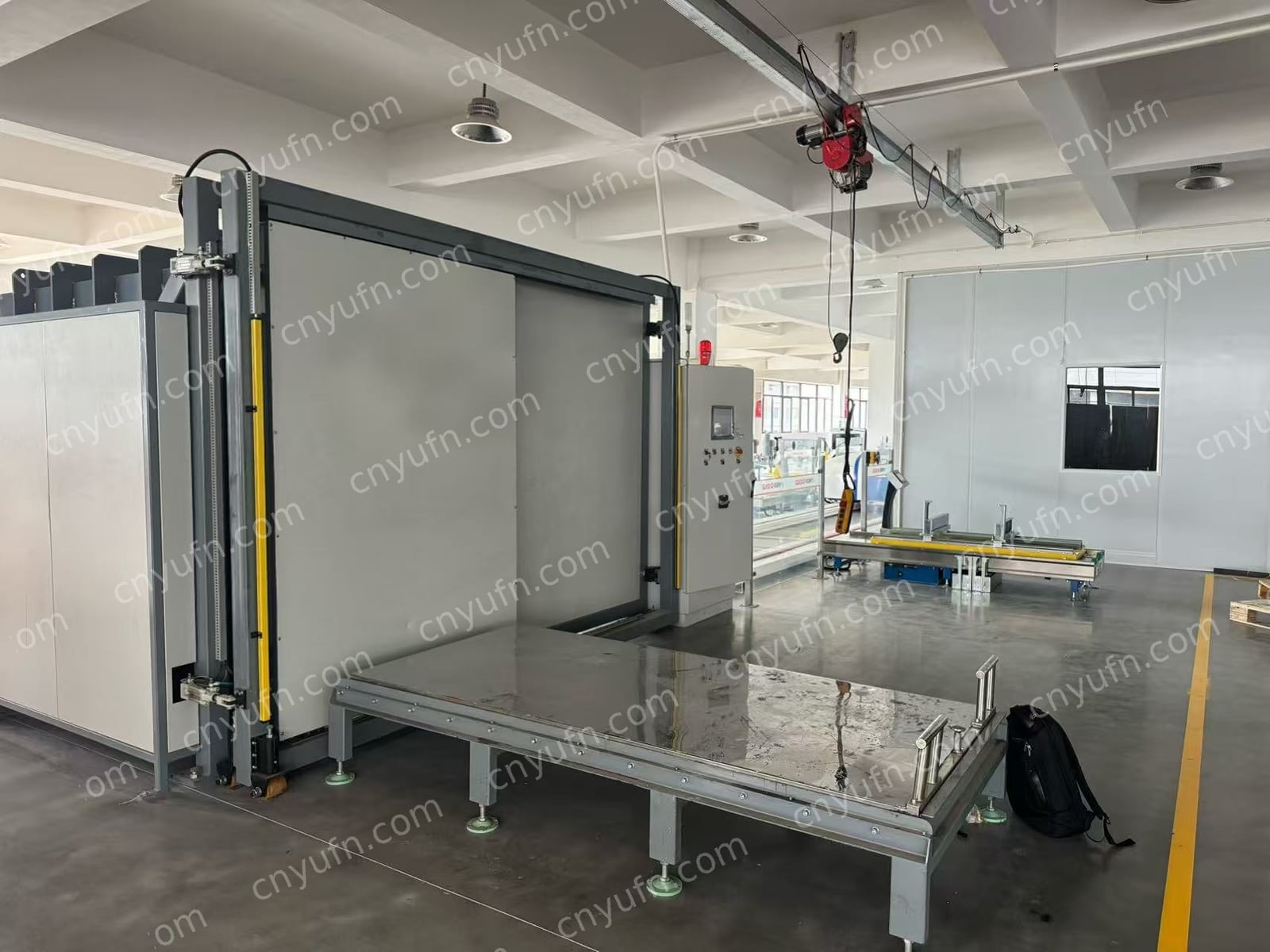
Helium Leak Detection Equipment for Switchgear Gas Tanks

RMU helium leak detection equipment

gas insulated switchgear helium leak detector

gas tank helium leak test vacuum chamber

helium mass spectrometer leak test station

Project Overview

This case shows helium leak detection equipment for switchgear gas tanks and sealed chambers. The equipment can serve ring main units, gas insulated switchgear, eco-friendly switchgear, RMU gas tanks, welded chambers, and other products requiring gas tightness testing.

Helium leak detection equipment is used to test sealed chambers, welded boxes, gas tanks, valve bodies, pipe connections, and sealing structures after bushing or insulator assembly. For medium voltage switchgear, ring main unit, gas insulated switchgear, and eco-friendly switchgear manufacturers, gas tank tightness is directly related to long-term product reliability, warranty risk, and international buyer confidence. Taizhou Yufeng Intelligent Equipment Co., Ltd. designs helium leak detection systems, RMU gas tank leak test stations, and gas insulated switchgear leak detection equipment as practical quality-control workstations, not as isolated instruments.

Customer Pain Points

The main customer pain point is that gas tanks include many weld and sealing positions, while manual checking cannot reliably find small leaks. Overseas buyers also ask more clearly for leak test data, visible process flow, and quality traceability.

Many factories begin with water testing, pressure holding, soap bubble checking, manual experience, or separate leak detection tools. These methods may help during prototype work, but they become weak when batch delivery, factory audits, and long warranty expectations increase. Small leaks may not appear during a short pressure holding test. Weld seams, bushings, flanges, O-rings, and pipe joints create many possible leak paths, and manual checking is easy to miss. Without a clear leak rate limit and test record, the quality team cannot easily trace which batch, station, or process caused the problem. International buyers usually ask how gas tank sealing is verified, whether test data is recorded, and whether the supplier has a repeatable quality process.

Yufeng Solution Design

The solution is built around a vacuum chamber and helium mass spectrometer leak detection, combined with product fixtures, safety doors, vacuum pump sets, pressure control, calibration leak verification, and HMI operation for batch gas tank leak rate testing.

Yufeng first studies the product structure and then selects the proper leak test method. For gas tanks, welded boxes, and sealed chambers, a common solution is vacuum chamber helium leak testing with a helium mass spectrometer leak detector for integral leak rate judgment. For weld seams, flanges, and local joints, helium spray testing or sniffer verification can be added to locate suspect points. For different product sizes, adjustable fixtures, positioning supports, and modular sealing structures improve changeover efficiency. A complete station may include a vacuum chamber, vacuum pump set, helium mass spectrometer leak detector, pressure sensors, calibration leak, PLC control, HMI interface, safety interlock, test data recording, and abnormal alarms.

Practical Test Logic

The value of helium leak detection is that it changes leak judgment from “it looks acceptable” to a measurable leak rate result. During testing, the system brings the product or chamber to the required condition, waits for background stabilization, and then uses helium as a tracer gas. Helium has a low natural concentration in air, small molecular size, and fast diffusion behavior, which makes it useful for finding very small leak paths. A helium mass spectrometer leak detector identifies helium signals and supports quantitative leak rate judgment. In factory production, the target is not always the highest laboratory sensitivity. The more important goal is to combine product requirements, takt time, false-pass risk, retest logic, and data storage into a stable production process.

How the Equipment Solves Buyer Concerns

With a standardized test process, measurable leak rate results, and stored test records, the customer can reduce missed-leak risk, improve product consistency, and present stronger sealing test capability during overseas audits.

A well-designed helium leak detection station helps manufacturers reduce missed leaks and unstable judgment. Production teams can follow a standard operating procedure instead of relying on different operator habits. Quality teams can keep leak rate values, test time, product numbers, and abnormal records for traceability. Sales teams can show a professional sealing test process during overseas factory audits, remote project meetings, and quotation discussions. After-sales teams benefit because stronger front-end leak testing reduces later complaints related to gas tank sealing.

Recommended Configuration

Module Recommended configuration
Test method Select vacuum chamber testing, helium mass spectrometer leak detection, local spray testing, helium pressurization, or sniffer verification by product structure
Core equipment Helium mass spectrometer leak detector, vacuum chamber, vacuum pump set, calibration leak, pressure control, PLC and HMI
Key process Evacuation, background stabilization, helium charging or spraying, leak rate judgment, data recording, and abnormal retesting
Suitable products RMU gas tanks, gas insulated switchgear, eco-friendly switchgear, welded boxes, sealed chambers, and bushing or insulator sealing structures
Future upgrade Barcode binding, test reports, photo records, MES integration, remote diagnosis, and batch quality traceability

Suitable Applications

Suitable for medium voltage switchgear, RMU, gas insulated switchgear, eco-friendly switchgear, SF6 or eco-gas insulated products, welded sealed boxes, and gas-tight component manufacturers.

The solution is suitable for manufacturers of RMU gas tanks, SF6 or eco-gas insulated switchgear, gas insulated switchgear cabinets, eco-friendly switchgear, welded sealed boxes, bushing assemblies, and other products that require gas tightness. Export-oriented factories should treat leak detection as part of the production line quality system, not as a temporary check before shipment. A practical upgrade can begin with an independent leak test station and later connect with upstream welding, cleaning, assembly, final release, and digital data systems.

Purchasing Recommendations

Before buying helium leak detection equipment, prepare product drawings, maximum size, weight range, test surfaces, weld seam distribution, allowable leak rate, target cycle time, helium charging requirement, vacuum chamber requirement, loading method, plant air and power conditions, and target export markets. A supplier can only choose the right chamber size, pump capacity, fixture design, calibration leak configuration, and operating process after understanding the real product. Buyers should not compare only machine appearance or single-unit price. Stability, changeover convenience, data recording, safety interlock, maintenance access, and after-sales support are more important for long-term operation.

Quality Control and Long-Term Maintenance

Stable operation requires regular checking of vacuum pumps, chamber seals, valves, filters, pipe joints, pressure sensors, leak detector status, and calibration leak validity. Operators should avoid releasing too much helium around the test area because high background can affect judgment. Factories should build inspection sheets, calibration records, abnormal retest rules, and maintenance schedules. For export factories, English operating instructions, leak test flow charts, sample test records, and FAT videos are also useful materials for international buyers.

Project Summary

Helium leak detection equipment is not just a test instrument. It is an important workstation in the gas tank manufacturing quality system. With the right chamber, leak detector, fixture, data record, and retest process, manufacturers can make sealing quality more stable, traceable, and convincing for international buyers.

Explore more customer cases or contact us to discuss RMU gas tank helium leak detection equipment, gas insulated switchgear leak test systems, eco-friendly switchgear leak test stations, or custom sealed-chamber inspection equipment.

Related applications: helium leak detection equipment, RMU gas tank helium leak test, gas insulated switchgear leak detection, helium mass spectrometer leak detector, vacuum chamber leak test system, sealed chamber leak rate testing.